
Augsburg Jewish Museum Shifts Visits to Kriegshaber as Downtown Renovation Closes Its Main Site
By The Israel Desk NewsroomPublished:
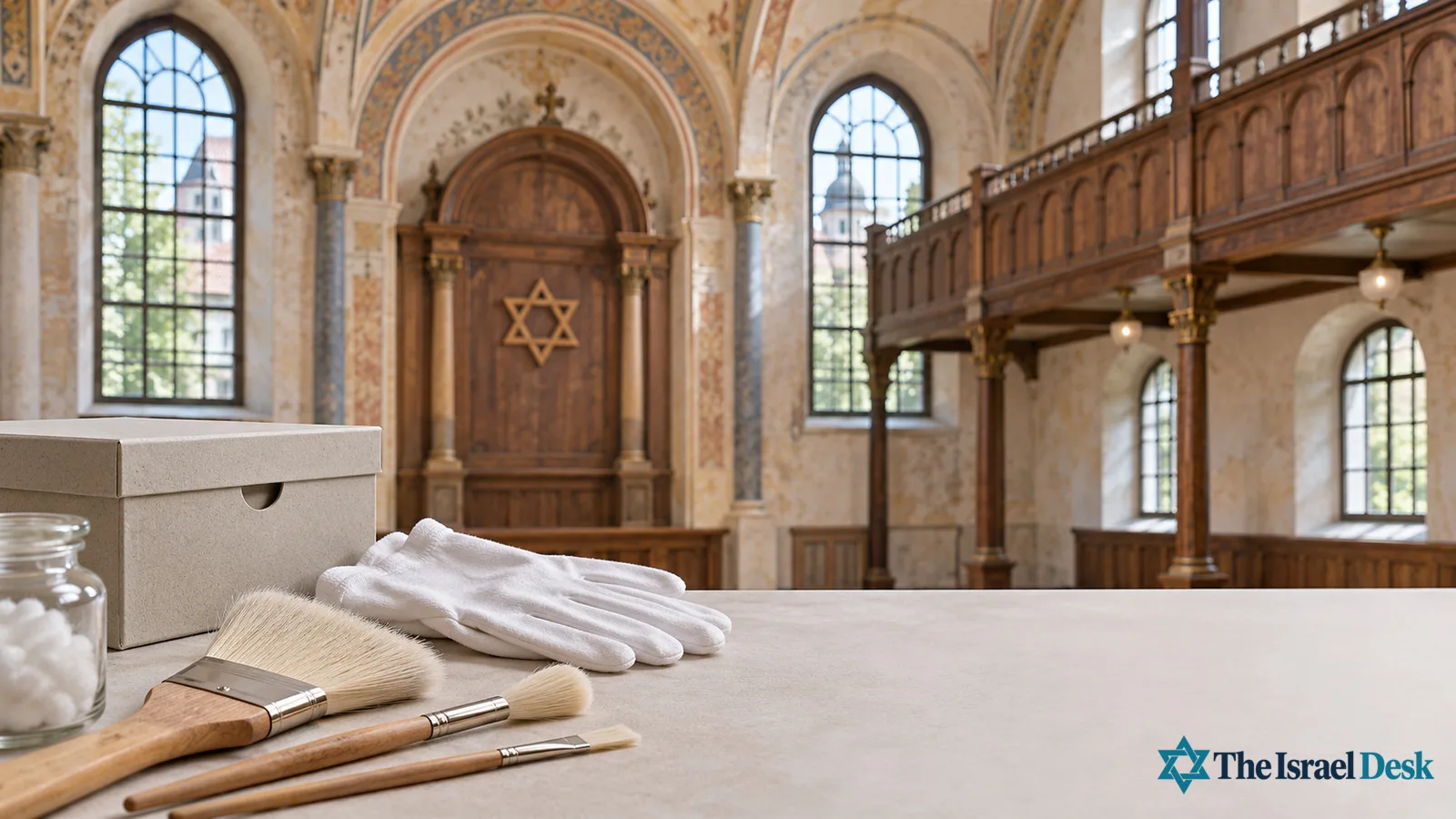
The Jewish Museum Augsburg Swabia has closed its downtown site for a renovation expected to keep it shut for several years, while expanding visits at the former Kriegshaber synagogue. The change took effect on November 2 and redirects visitors from the Great Synagogue complex to a second historic Jewish site elsewhere in Augsburg.
The museum says construction is currently expected to finish in 2029, followed by installation of a new permanent exhibition and reception facilities. It anticipates reopening the downtown museum in 2030. Meanwhile, tours, educational activities and events continue at Kriegshaber and other city venues.
Why the downtown site has closed
Renovation of the synagogue complex began in 2022. The work covers the synagogue and community buildings at Halderstraße 6-8, which accommodate both the Jewish Community of Swabia-Augsburg and the museum. The project has now reached the west wing, where the museum is housed.
The plans include a redesigned permanent exhibition, elevators improving access to the exhibition and Great Synagogue, a new reception area with a shop and café, and an annex for temporary exhibitions. The museum presents the closure as part of that broader renewal. Its reopening year remains an expectation tied to the work and subsequent exhibition installation.
Kriegshaber becomes the main place to visit
The former Kriegshaber synagogue at Ulmer Straße 228 is the museum's continuing public location. Established in a residential building in the early 18th century, it served a rural Jewish community in what was then a separate village. It has been the museum's second site since 2014.
The museum identifies it as the oldest surviving synagogue building in Bavarian Swabia. Its conservation preserves traces of the community that used it, including the Torah ark, ceiling decoration and women's gallery. A multimedia guide helps individual visitors explore the building and its history; guided visits and workshops remain available for groups and school classes.
Hours, admission and the journey across town
The new schedule opens Kriegshaber six days a week: Monday, Tuesday, Wednesday and Friday from 9 a.m. to 5 p.m.; Thursday until 8 p.m.; and Sundays and public holidays from noon to 5 p.m. It is closed on Saturdays. These are Augsburg local times.
Standard admission is €3, including the multimedia guide. Eligible concession visitors enter free, while the Kultursozialticket costs €1. The museum asks visitors to bring documentation for free or reduced admission. Its listed 60-minute guided tour costs €10 normally, €6 at the reduced rate and €4.50 for students, including admission; registration is required.
The museum estimates a 20-minute public transport journey from the center. Tram 2 serves Neusässer Straße, and bus 32 serves Gieseckestraße, both close to the site. Travelers arriving at Augsburg-Oberhausen station can connect to tram 2. Large backpacks and suitcases are not permitted inside, and visitors should allow time for security checks.
Jewish sporting history remains on display
The museum's activity also continues in the city center through a separate exhibition at the Maximilianmuseum. “Lined up. Sidelined” examines Jewish sporting life in Augsburg and Swabia and runs through November 15. It was developed with FC Augsburg and students from the University of Augsburg.
The German language exhibition traces athletes' lives and the exclusion of Jews from sports clubs under Nazi rule. It is at the Viermetzhof, Fuggerplatz 1, with free admission Tuesday through Sunday from 10 a.m. to 5 p.m. local time. The museum says the exhibition venue is accessible to people with disabilities.
A November 8 event links Augsburg and Tel Aviv
The museum has scheduled “Lifelines 2.0” with Michael Guggenheimer at Sensemble Theater on November 8 at 6 p.m. in Augsburg, equivalent to 7 p.m. in Israel. The German language event commemorates the November pogrom and explores how the Holocaust continues to affect descendants of Augsburg's prewar Jewish community.
Guggenheimer was born in Tel Aviv to a father from Augsburg and a mother from Görlitz and lives in Zurich. The event takes place at Bergmühlstraße 34, with entrance from Walterstraße. Tickets are €8, or €5 reduced, through the theater online, by telephone or in person. The museum and theater have run the Lifelines project since 2002, focusing on the second and third generations since 2019.
Preserving two chapters of Jewish life
The Great Synagogue was built between 1913 and 1917. It was desecrated and set on fire during the November 1938 pogroms; its main sanctuary was rededicated in 1985 after restoration. Kriegshaber preserves an older rural chapter of the region's Jewish life.
For visitors during the renovation, the practical route now starts at Kriegshaber, with additional programs at named venues across Augsburg. The expanded schedule keeps access to Jewish history available while the downtown complex undergoes its next major reconstruction.


