
Brno Seminar Brings Czech Heritage Workers into Jewish Cemetery Preservation
By The Israel Desk NewsroomPublished:
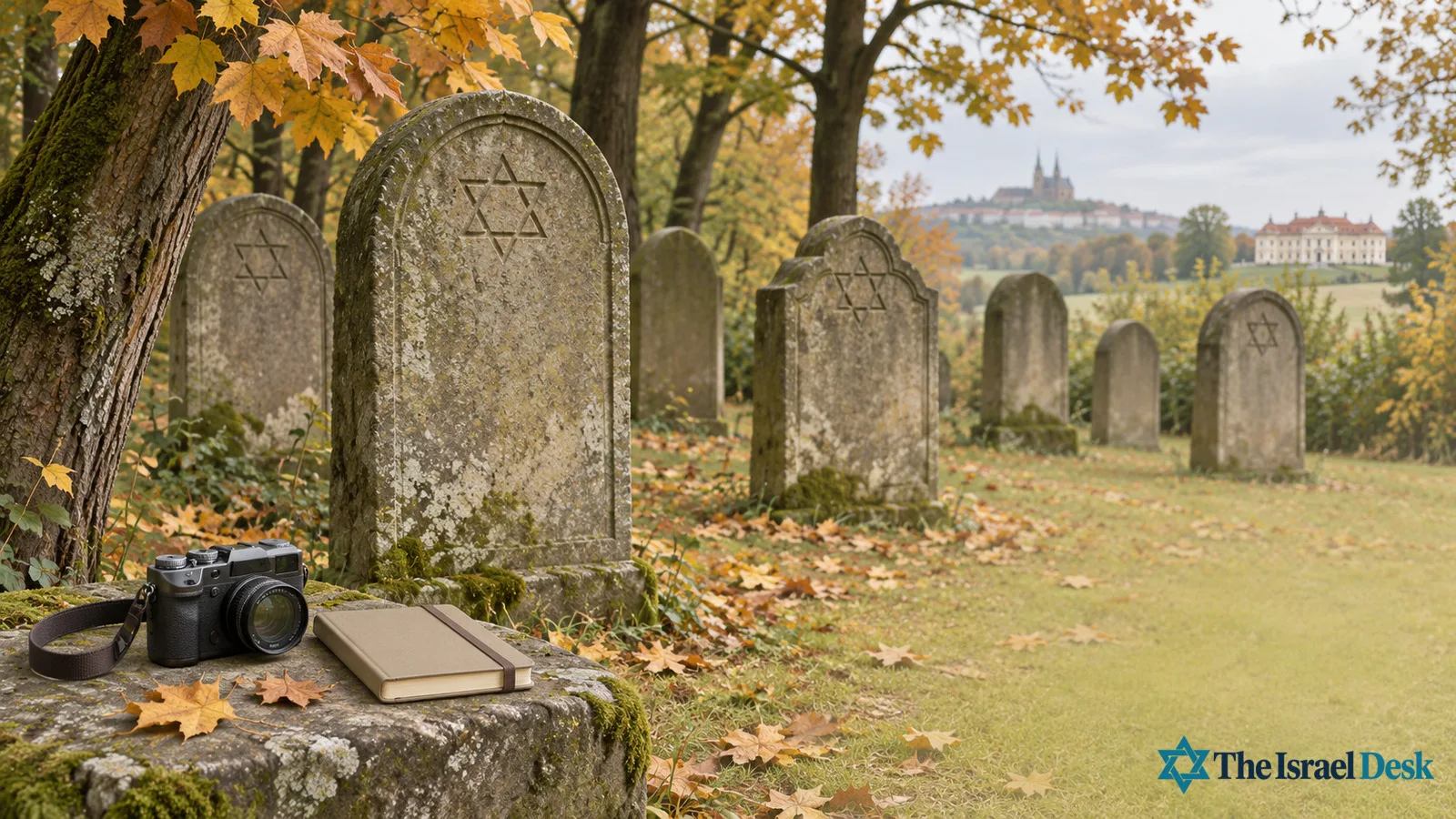
Museum workers, teachers and heritage specialists are scheduled to gather in Brno on November 11-12, 2026, for practical training in the preservation of Jewish cemeteries. The ESJF European Jewish Cemeteries Initiative has announced a program combining lectures with visits to burial grounds in Brno and nearby Slavkov u Brna, including a workshop on understanding gravestone inscriptions.
The seminar will be conducted in Czech. Matana, a partner responsible for Jewish heritage properties, says the course is also intended for students and people interested in regional history who have little previous experience with Jewish sites. Its field visits connect the classroom material to actual monuments and recent conservation work.
Who is organizing the training
ESJF is organizing the seminar with the Dr. Dagmar Lieblová Foundation, Matana, the Federation of Jewish Communities in the Czech Republic and the Jewish Community of Brno. The German Federal Foreign Office is providing financial support. Czech heritage organization PROPAMÁTKY is the media partner.
The published program covers basic cemetery care, restoration projects in the Czech Republic and ESJF's approach to documenting gravestones. Participants will also discuss the future use of Jewish heritage sites and exchange experience with specialists. A guided visit to Brno's synagogue accompanies the cemetery sessions, placing the burial grounds within a wider picture of the region's Jewish institutions.
Slavkov links the course to recent repairs
The visit to Slavkov u Brna follows work already carried out there. Matana's heritage record, updated in March 2026, states that part of the cemetery's perimeter wall was repaired in cooperation with ESJF in 2025. The site therefore gives participants an example of a completed protective intervention alongside the gravestones featured in the training.
The record lists 471 gravestones. Its main description dates the oldest markers to the 18th century and most to the 19th, while its historical section records the transfer of stones dated 1620 and 1623 from an older cemetery. The entry leaves those dates unreconciled. Materials include sandstone, granite, marble and limestone; lions, crowns and stars appear among the carved motifs. These give the discussion of documentation and symbolism concrete local examples.
A working cemetery with thousands of monuments
Brno's Jewish cemetery offers a different scale. According to the Jewish community's visitor information center, it has served as a Jewish burial ground continuously since its establishment in 1852 and contains approximately 6,500 surviving gravestones. The collection ranges from modest markers to substantial family tombs.
The cemetery is at Nezamyslova 27 in the Židenice district. The community also provides an online grave search and guided visits. These existing ways of recording and explaining the site give the seminar's inscription workshop a practical context: individual graves can be studied within a cemetery that still serves a living Jewish community.
Reading inscriptions and planning conservation
The Brno program includes both the texts on gravestones and their symbolism. Matana's announcement specifically describes a workshop devoted to understanding the inscriptions, while PROPAMÁTKY's program highlights symbolic decoration during the guided cemetery visit. The course brings those historical questions together with lectures on physical preservation.
ESJF describes its conservation guidance as covering the process from surveying a site to treatment and maintenance, with attention to conservation ethics and the original appearance of the material. Its educational publications also cover interpreting tombstones and organizing cemetery visits. These resources provide background for the organization's combination of documentation, education and protection.
Registration notices give different deadlines
The event dates are consistently listed as November 11-12. The application dates differ: ESJF's announcement and the registration form give October 4, 2026, while the Dr. Dagmar Lieblová Foundation's announcement gives August 22. The published notices do not explain that difference, and both application deadlines have passed.
Attendance is limited and involves selection from applications. Anyone asking about a late place should contact ESJF directly rather than make travel arrangements on the assumption of admission. The designated contact is Alona Myshakova, at alona.myshakova@esjf cemeteries.org. The registration form says selected participants will receive the detailed program and organizational information.
Where the sessions will take place
PROPAMÁTKY lists the classroom sessions at the Jewish Community of Brno, třída Kpt. Jaroše 1922/3, 602 00 Brno, in the Černá Pole district. The public announcements give no starting hour. Participants should confirm the meeting arrangements and timetable with the organizers before traveling.
There is no participation fee. The registration form says refreshments will be provided and accommodation for the night of November 11-12 can be arranged where needed; participants cover their own travel costs. Accommodation requirements were to be stated in the application. The program combines the Brno sessions with visits to the cemetery at Slavkov and the Jewish sites in Brno.


