
IDF Announces New Golani and Nahal Battalions Built Around Drones and Precision Strikes
By The Israel Desk NewsroomPublished:
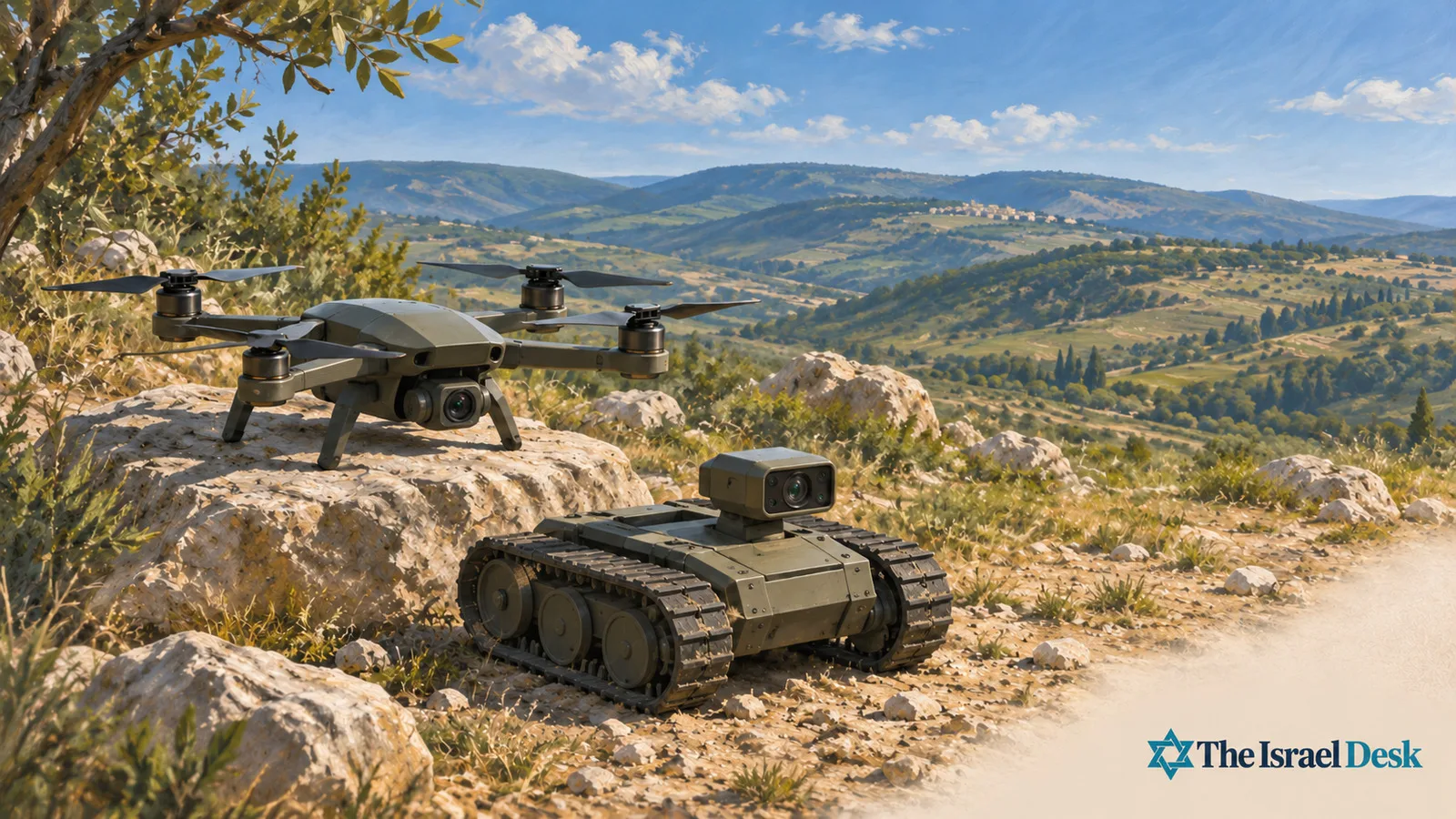
The Israeli military announced on Monday, November 9, that it is establishing two infantry battalions specializing in finding and striking enemy targets: Alon, numbered 11, in the Golani Brigade, and Nofekh, numbered 935, in the Nahal Brigade.
The decision, approved by Chief of Staff Lt. Gen. Eyal Zamir, follows planning led by the Ground Forces and the Manpower Directorate. Israeli outlets reporting the announcement said both units were being formed. Their full organizational arrangements had not yet been finalized.
Reconnaissance and firepower in one formation
The battalions’ planned equipment spans drones, robotic systems, observation and imagery tools, advanced weapons and precision guided munitions. The Jerusalem Post’s November 9 report described their role as detection and strike, bringing intelligence gathering and the ability to engage a target into dedicated infantry formations.
That combination is the substance of the announcement. A drone can supply a view of terrain or a concealed position; imagery and observation help establish what ground troops are facing. The planned units are intended to connect those capabilities with the weapons used to attack identified targets.
The military’s stated objective, carried by Israel Hayom, is to strengthen troops operating on the ground and adapt the use of combat personnel to changing operational needs. Its description of the battalions as a force multiplier expresses that intended effect. No numerical improvement in combat effectiveness was published.
Where Alon and Nofekh fit
Arutz Sheva’s Hebrew report places the new Alon Battalion alongside Golani’s existing 12th, 13th and 51st battalions and its reconnaissance unit. The new number, 11, will identify the additional formation within the brigade.
Nofekh will join Nahal’s 50th, 931st and 932nd battalions, alongside its reconnaissance battalion, numbered 934. The additions give two established infantry brigades their own designated formations for this combination of battlefield technology and strike capabilities.
The announcement concerns both brigades under the same planning effort. It provides their names, numbers and intended specialties, while leaving the detailed force structure to the continuing organizational work. The units’ establishment was announced without a date for operational readiness.
Reconnaissance officers named to lead
Makor Rishon reported that commanders had been selected for both battalions. Maj. Matan Yosef, deputy commander of Golani’s reconnaissance unit, was named to lead Alon. The newspaper said he had been seriously wounded during the war.
Amit Haran, who had served as deputy commander of Nahal’s reconnaissance unit, was named to lead Nofekh. The appointments link the new formations to officers with experience in their parent brigades’ reconnaissance forces.
The command assignments are reported by Makor Rishon. The broader military announcement, as carried by the other outlets, concentrates on the units’ establishment and capabilities. It leaves the full personnel and organizational instructions to be communicated to service members through military channels.
Building on earlier efforts to shorten targeting time
Israel Hayom connected the change to an earlier army effort reported in April 2021. That plan envisaged converting support companies in infantry and armored forces into formations combining target detection and attack, with teams handling drones, intelligence gathering and precision fire.
The recurring operational aim is to reduce the interval between finding an enemy and engaging it. The November announcement gives that combination a dedicated battalion framework in Golani and Nahal. It places the specialists and their equipment within the structure of the infantry brigades receiving them.
The same Israel Hayom report recalled a Defense Ministry purchase of drone and autonomous systems from Elbit Systems in December 2024, worth about NIS 150 million. That procurement is background to the army’s wider adoption of such equipment. The November announcement assigns no named model or portion of that purchase to either new battalion.
Staffing and employment still require decisions
Makor Rishon identified two unresolved organizational questions: where the soldiers will come from and how the units will be employed. Its report said it remained unclear whether they would maneuver as complete battalions or mainly organize and provide specialist companies to other fighting units.
These alternatives affect the number of personnel required, command arrangements and the support each formation needs. The military has described an expansion of ground force capabilities, but has not published a staffing table showing how the new battalions will be filled.
Formation comes before deployment
For soldiers in the two brigades, the next stated step is the distribution of detailed instructions through the usual military channels once the arrangements are completed. The reports provide no public recruitment window or confirmed deployment timetable.
The decision nevertheless establishes a defined organizational change: two named battalions, attached to two named brigades, with reconnaissance, robotics and precision strike capabilities at the center of their mission. Training, staffing and the final operating structure will determine how that mission is delivered to troops in the field.


