
Children Killed in Jordan's Syria Strikes as Damascus Disputes Its Account
By The Israel Desk NewsroomPublished:
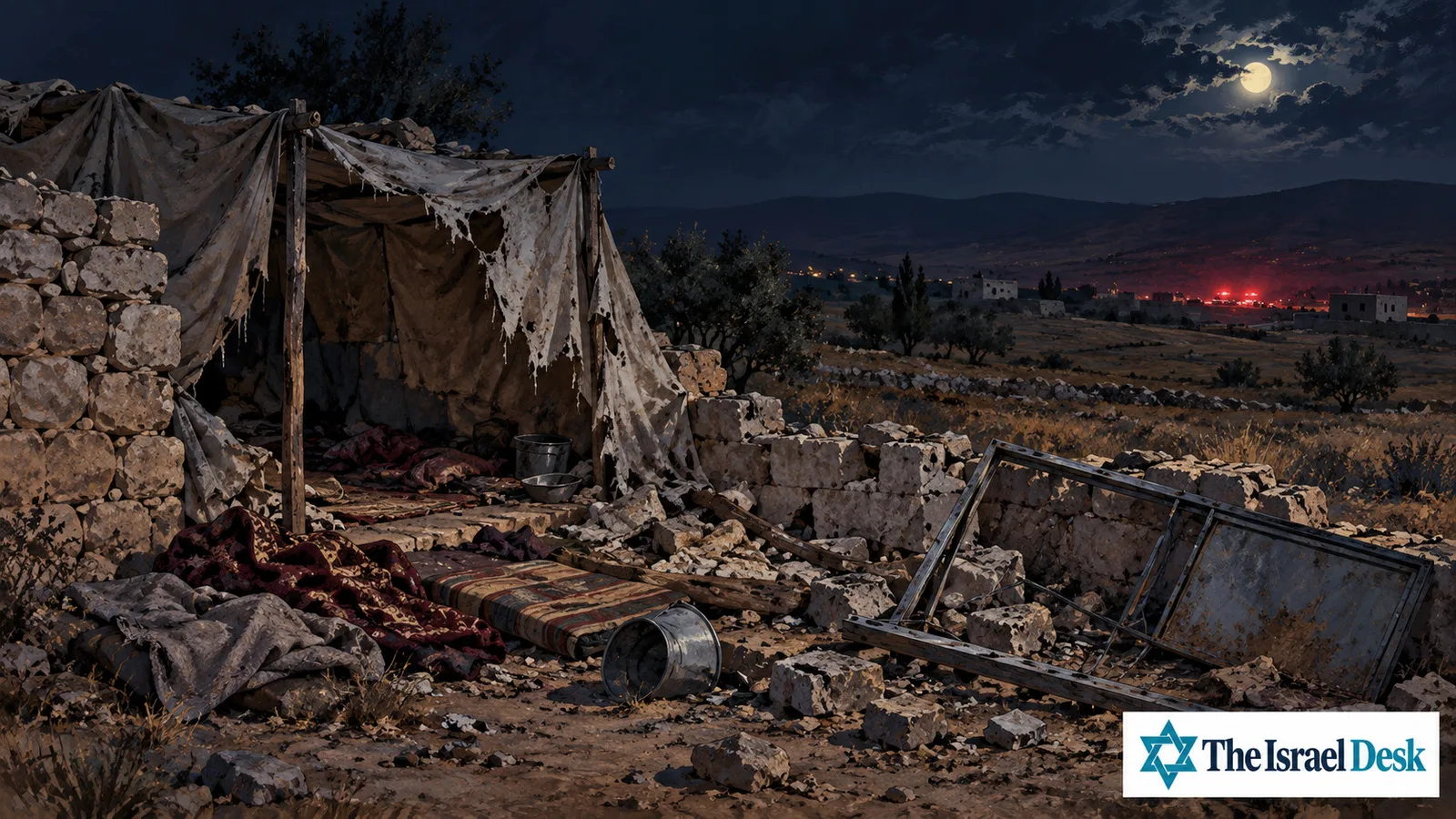
Children, a woman and an elderly man feature in Syrian accounts of Jordan's October 26 airstrikes, challenging the picture of a successful operation against terrorists. Damascus has also directly rejected Jordan's assertion that the attack was coordinated with the Syrian government.
The initial account put the death toll at eight. SANA's current bulletin, quoting Daraa health director Khaled al-Amiyan, lists seven dead, including three children and a woman, with three people injured. The figures remain inconsistent, but the central issue is already clear: Syrian officials are reporting civilian deaths where Jordan announced attacks on terrorist targets.
What Jordan said it had achieved
The Jordanian Armed Forces presented the operation as retaliation for the attack on mourners at Hamoud church in Karak on October 23. Its statement linked the groups targeted in southern Syria to the perpetrators of that church attack.
In the statement carried by Jordan's official Petra news agency, the military said its aircraft had destroyed sites used by those groups, killed or wounded members and destroyed vehicles. It also explicitly said the operation had been conducted in coordination with the Syrian government.
Those were two substantial assertions: that the people and locations struck were connected to terrorism, and that the neighboring state had agreed to the operation. The accounts emerging from Syria challenged both parts of that presentation, through a government denial on one issue and descriptions of civilian victims on the other.
Damascus denies prior coordination
The Syrian government's response was direct. In a statement published by SANA early on October 27, it said there had been no advance coordination with the Syrian side. It announced an investigation into the circumstances of the strikes and said communication channels with Jordan were open.
Later that day, Syria's Foreign Ministry expressly condemned the bombardment of sites in Daraa and the entry into Syrian airspace without prior coordination. The ministry also renewed its condemnation of the church attack in Jordan.
Damascus said work was under way to establish an urgent joint field and security committee with Jordan to prevent a repeat. Cooperation after the strikes, however, is a separate matter from the advance agreement Jordan had claimed. The Syrian statements leave that contradiction in the open.
The people behind the casualty figures
The accompanying SANA video brings the dispute back to al-Taff, a village in the Daraa countryside. Residents speak outside at night, while the footage moves between interviews, broken household belongings, rubble and emergency vehicles.
One resident describes people sheltering in a tent and children among those killed. He insists that the people there were civilians and denies the presence of weapons or drugs. A second resident also describes a family tragedy and calls for the Syrian authorities to investigate.
These are witnesses' accounts of the people and the place they knew. Their testimony puts a concrete question to the military's announcement: what evidence connected this location and its occupants to the church attackers? Calling an operation a response to terrorism cannot, by itself, answer what happened to the civilians at the site.
Video: SANA. Original Arabic audio with English subtitles.
A strike on a family, and questions for the investigation
The health director's bulletin identifies al-Taff in the al-Masmiyah area, the vicinity of Nassib and Muzayrib among the locations struck. The overall toll covers multiple locations; it should not be read as a single verified list of people killed inside one tent.
An investigation needs to connect those separate locations with the victims, the targets selected and the evidence used to select them. The residents' description of a civilian family and Jordan's description of terrorist sites demand specific answers about the same operation.
The church attack provides the context Jordan gave for its decision. It does not make the deaths described in the Syrian footage disappear. Both the murdered churchgoers and the Syrian civilians deserve to be treated as people whose lives matter, without making sympathy for one group conditional on silence about the other.
Who will condemn, and by what standard?
Syria has condemned the strikes. The wider question is whether politicians, campaigners and institutions will examine these civilian deaths with the urgency they demand when Israel is involved.
Will those who invoke the word "genocide" against Israel demand evidence and accountability from Jordan? Will the deaths of Syrian children produce sustained attention, or become a brief item passed over once the military's explanation has been repeated? The demand here is for consistent scrutiny, with claims assessed against the evidence.
There is no reason to insert Israel into responsibility for an operation Jordan itself announced. The questions belong to the authorities who ordered it and to those investigating its consequences. The children in al-Taff do not become less deserving of attention because the aircraft were Jordanian.


