
Dead Sea and Judean Desert Guide: Safe Beaches, Masada and Ein Gedi Planning
By The Israel Desk NewsroomPublished:
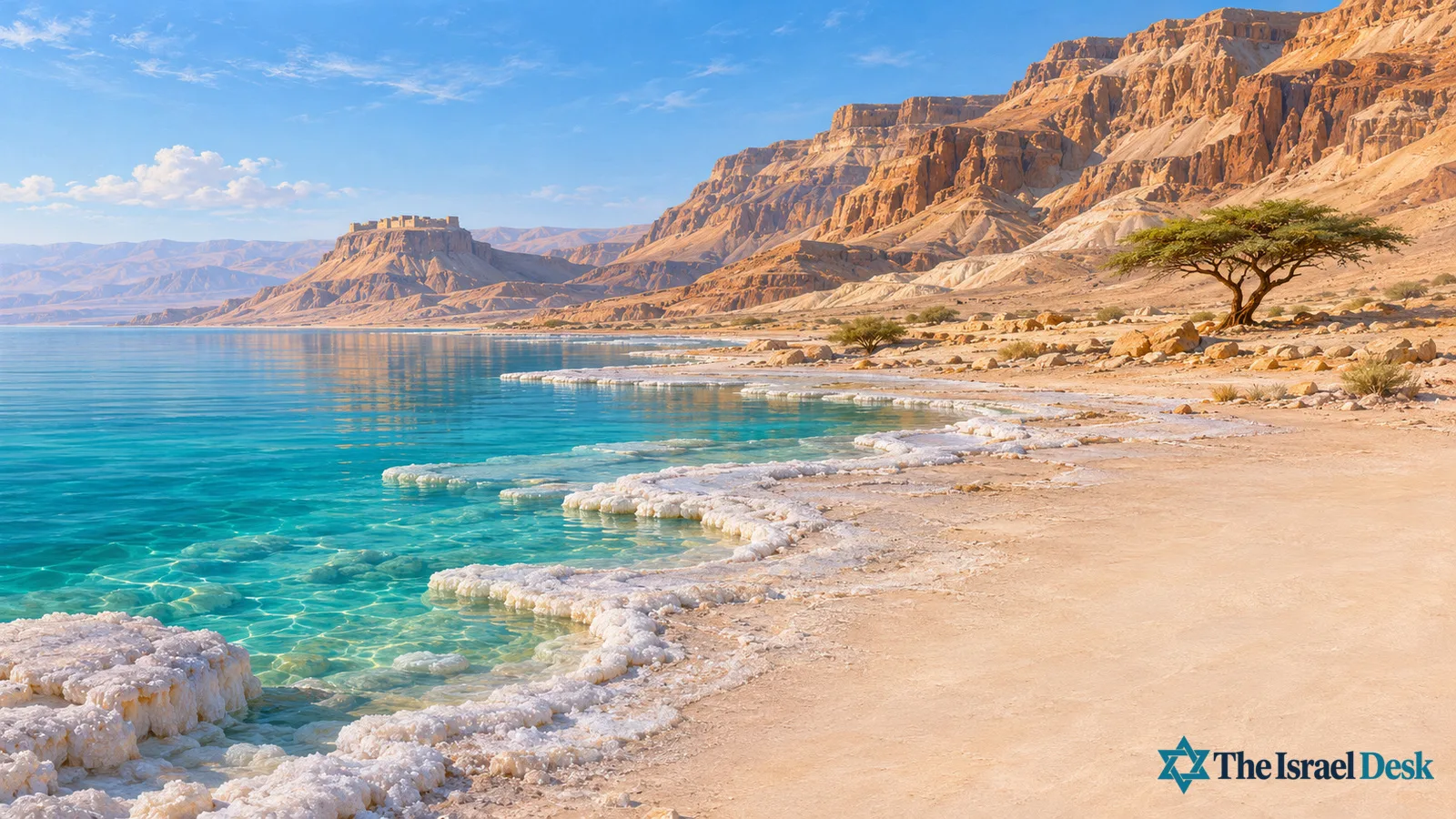
A good Dead Sea day starts with one main activity and enough time to enjoy it. Choose Masada, an open Ein Gedi route or a supervised beach as the anchor, then add a second stop if conditions allow. The desert's heat, flood risk and changing trail access should shape the plan before you leave, especially when combining a hike with bathing.
Cooler months usually make walking more comfortable, while summer visits need especially early starts and close attention to heat restrictions. Winter brings the additional need to check rain and flash flood warnings before every desert route.
Check weather and closures before setting out
Do not enter streambeds when flash flooding is possible, even if the sky above you looks clear. Rain farther upstream can send water through desert channels. Check Israel Meteorological Service warnings and Israel Nature and Parks Authority notices immediately before departure. If a route is closed, choose another activity rather than searching for an informal entrance.
Heat can also close trails or bring forward their last entry time. Carry drinking water for the full route, plus a reserve, and obtain route specific quantities from park staff. Use a hat, sunscreen and suitable walking shoes. A spring or stream on the map is not a dependable source of drinking water. Avoid strenuous walking during the hottest hours.
Choose the correct approach road
From Jerusalem, the usual approach to the northern Dead Sea follows Route 1 east and then Route 90. Route 90 connects the coastal access points farther south. Travelers approaching from Arad use Route 31 toward the southern Dead Sea. Check current road and security instructions, and confirm any rental car restrictions before choosing an itinerary.
Masada has separate eastern and western approaches. The cable car is on the eastern side, reached from Route 90. The western ramp is approached from Arad via Route 3199. There is no road through the archaeological site joining its two parking areas. Enter the correct entrance into navigation before starting, particularly for a visit planned around sunrise.
Masada: sunrise walking and cable car hours
The Nature and Parks Authority normally opens the Snake Path about an hour before sunrise. It describes the climb as difficult and taking roughly an hour. The western ramp generally opens about half an hour before sunrise, with an ascent of around half an hour. Heat, wind and rain can alter these arrangements, so confirm the day's access.
The ordinary cable car schedule starts at 08:00. A sunrise cable car trip requires a specifically advertised service and booking. Standard park closing is 17:00 in summer and 16:00 in winter, with earlier Friday and holiday eve closing; final entry and the last upward cable car are an hour earlier. Leave time on the summit before the last return.
Ein Gedi: reserve the route that is actually open
Book Ein Gedi in advance and check the notice for the particular trail. As of November 2, 2026, the authority's Hebrew notice says October floods have restricted access: Nahal David has a short walk of about ten minutes to the first waterfall, with no water in its pool because of sediment, while Nahal Arugot is closed for safety work.
The same notice lists an experienced hiker route from Tel Goren toward the spring and David's Cave, with an 08:00 opening, last entry at 12:30, departure from the cave by 13:30 and from the spring by 14:00. These temporary arrangements can change. Confirm them directly before travel, including whether the accessible path and any planned water access are available that day.
Enter the Dead Sea only at supervised beaches
Use an authorized beach during lifeguard hours. Tamar Regional Council's bathing instructions say to enter carefully, lower into a sitting position and then lie back. Keep your head out of the water. Do not dive, jump, splash or swallow the water. If you swallow Dead Sea water, seek the lifeguard or first aid provider immediately.
Bring fresh water and use the showers afterward. Keep children close and follow the lifeguard's directions. High buoyancy does not remove drowning risk. Wear suitable footwear on hot or rough surfaces, and stay inside designated access areas: sinkholes make abandoned shoreline paths and improvised approaches dangerous.
Accessibility and the likely budget
Masada's cable car is wheelchair accessible, and the upper station connects to the site by an accessible bridge. Confirm which summit routes suit your needs. Ein Gedi's facilities include accessible areas, but flood damage can change what is usable. Contact the reserve before relying on an older accessibility description, and check accessible beach entry with the operator.
Published Nature and Parks Authority rates consulted on November 2 list Masada admission without the cable car at NIS 37 for an adult and NIS 21 for a child. Ein Gedi lists NIS 31 and NIS 16 respectively. Cable car tickets, separate attractions, parking and private beach facilities can add costs. Recheck the booking price and applicable concessions before payment.
Build a day with a realistic finish
Ein Bokek and Hamei Zohar offer public beach options with organized facilities; confirm current lifeguard hours and any equipment or parking charges. A practical combination is an early Masada visit followed by a supervised beach. Fit travelers can instead choose an open Ein Gedi route and leave the afternoon flexible.
If using buses, check the current outward and return services, especially for Fridays, Saturdays and holidays. Allow time for the walk from the stop to the actual entrance. Carry food, water and a charged phone, and finish desert walking well before darkness. The best itinerary is one whose return journey is as carefully planned as its first stop.