
How Israel's Layered Air Defense Connects Iron Dome, David's Sling, Arrow and Lasers
By The Israel Desk NewsroomPublished:
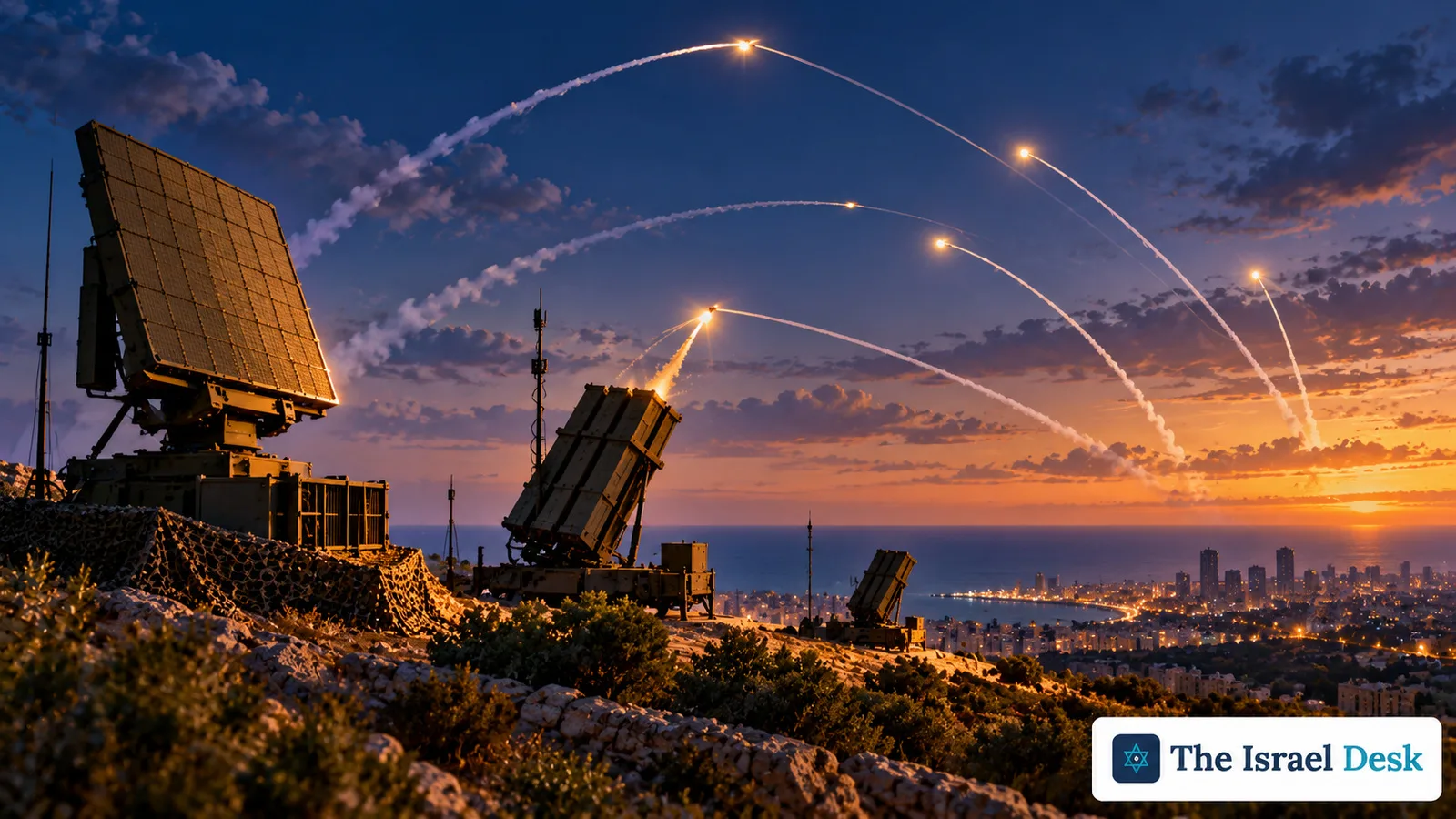
A rocket, a cruise missile, a ballistic missile and a drone do not present the same problem. Israel's air defense therefore uses several systems with different roles, connected through detection, assessment and command. The familiar names describe parts of that architecture, rather than interchangeable weapons that all perform one task.
The Israeli Defense Ministry and its industrial partners publicly describe Iron Dome, David's Sling and the Arrow family as complementary elements. Iron Beam adds a laser capability.
The defense begins before an interceptor launches
Detection and tracking come first. Sensors help establish what is moving, where it is going and whether it poses a threat. Israel Aerospace Industries describes its Multi-Mission Radar as a principal sensor for Iron Dome and David's Sling, while the Green Pine radar is associated with the Arrow system. The company also describes radar data supporting civilian warnings.
A launcher is therefore only the most visible part of a larger process. Information has to move from sensors into assessment and command before a defensive response can be selected. Layering combines different interceptors with that shared need for a reliable picture.
Iron Dome addresses the shorter range problem
Iron Dome is best known for defending against shorter range rockets. The Defense Ministry's public defense export directory describes its ability to distinguish threats to populated areas from projectiles expected to fall into the sea or open ground. That assessment helps explain why seeing an incoming launch does not necessarily mean seeing a defensive launch in reply.
The system's role is to protect people and important locations from threats within its assigned mission. An interceptor is a physical weapon sent to defeat an incoming object, while the radar and control components help determine the engagement.
David's Sling covers a different set of threats
The Defense Ministry describes David's Sling as part of Israel's layered air and missile defense and has publicized tests against ballistic missiles, cruise missiles, aircraft and unmanned aerial vehicles. Rafael and Raytheon developed its Stunner interceptor. Its role includes threats beyond the familiar short rocket scenario associated with Iron Dome.
Different flight characteristics create different interception problems. David's Sling contributes a complementary response, and public descriptions of its tests show why the national defense cannot be reduced to a single category of target.
Arrow is the ballistic missile defense family
Israel Aerospace Industries describes the Arrow Weapon System as a defense against incoming ballistic missiles. Arrow 2 and Arrow 3 are related components with different interception capabilities. The manufacturer's description gives Arrow 2 both atmospheric and exo atmospheric capability.
Arrow 3 is associated with interception outside the atmosphere, as described in public Israeli and American missile defense statements. The family addresses a different part of the threat picture from shorter range rockets. Its purpose is to confront ballistic missile threats through a system that includes detection, tracking, command and interceptors, rather than through the interceptor alone.
Iron Beam adds directed energy
On December 28, 2025, the Israeli Defense Ministry and Rafael announced delivery of the first operational Iron Beam laser system to the IDF. The ministry described testing against rockets, mortars and unmanned aerial vehicles.
The basic difference is the means of engagement: a laser uses directed energy, while missile based systems launch an interceptor. The ministry presents Iron Beam as a complement to the existing layers.
Interception and civilian protection work together
Civilian warning and protective action remain part of the same effort. People should follow the current instructions of Israel's Home Front Command when alerts are issued. Sensors, interceptors, command teams and civilian precautions each contribute to protecting lives.