
Israel’s Eastern Border Plan Links a NIS 5.5 Billion Barrier to Civilian Expansion
By The Israel Desk NewsroomPublished:
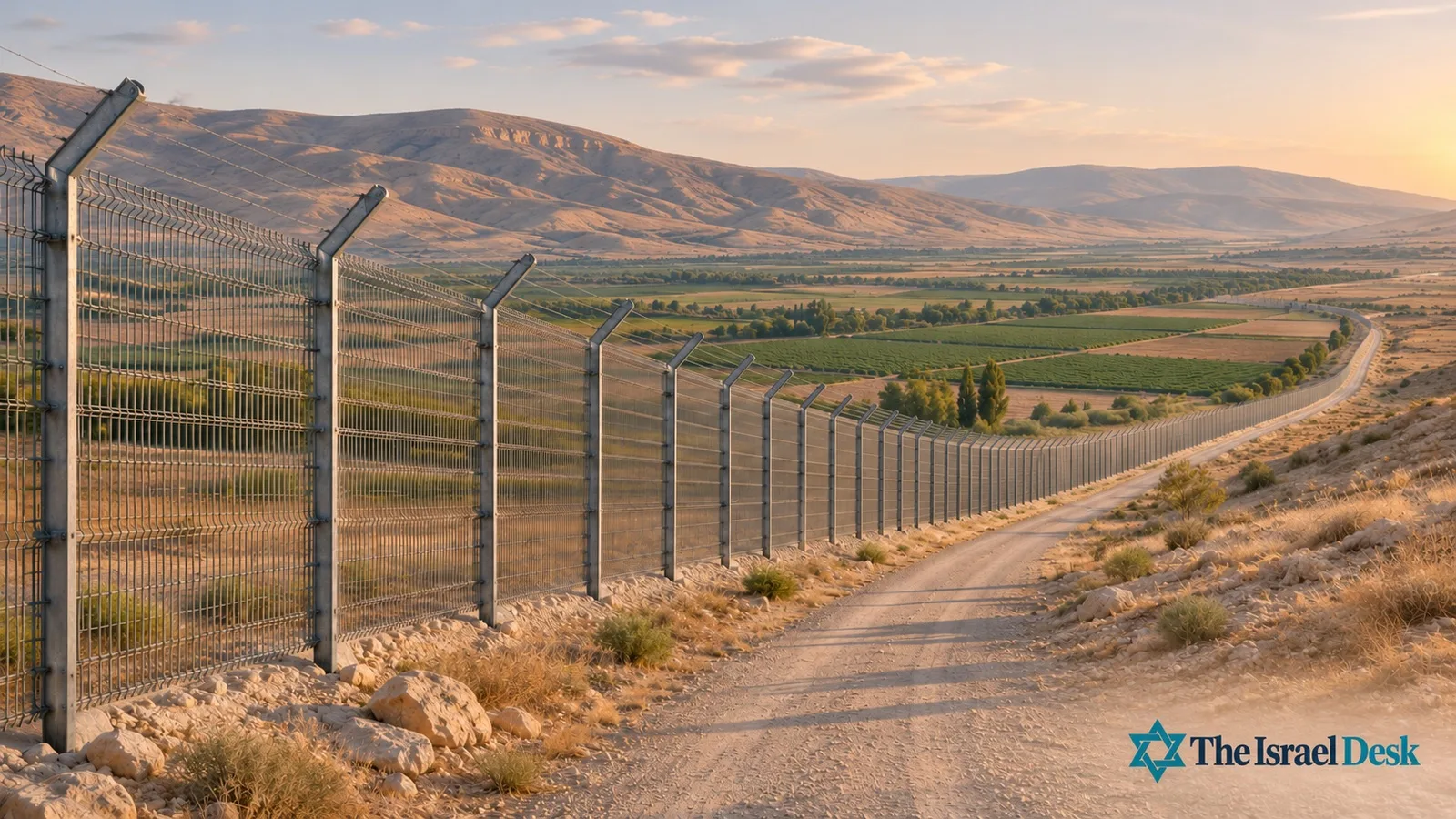
Israel’s Defense Ministry is pursuing funding for the next stages of its eastern border barrier while advancing a wider program of civilian development, according to its response published by Israel Hayom on November 9 and separate reporting by Walla that day.
Walla described a barrier of about 500 kilometers with an estimated cost of NIS 5.5 billion, alongside roughly 40 civilian presence and settlement sites. The ministry told Israel Hayom that construction was progressing at several locations and that it was working to settle the budget for subsequent stages. That leaves a substantial difference between the program’s overall ambition and the work already financed.
Construction has begun, financing remains staged
The first dozens of kilometers have been built, Walla reported. Maj. Gen. Eran Ofir heads the barrier construction effort, while Brig. Gen. (res.) Mordechai Benita’s Eastern Region Directorate coordinates civilian projects and the involvement of other ministries.
Israel Hayom’s November 9 account put the sections for which funding and work had advanced at about 80 kilometers. It also described separate efforts in the southern Arava, including meetings with contractors over approximately 14 kilometers of fencing and the placement of concertina wire by Border Defense troops.
In its response, the ministry described the first sections as part of a multiyear program covering the eastern region. It said construction was moving quickly at several sites. Its statement that the next budgets were being negotiated did not provide a completion date for those later stages.
Two sets of figures remain in the record
The 500-kilometer, NIS 5.5 billion description differs from another published specification. A Defense Ministry announcement dated March 3, 2025 described 425 kilometers costing NIS 5.2 billion, running from the southern Golan Heights to the Samar dunes north of Eilat.
Israel Hayom used those same 425-kilometer and NIS 5.2 billion figures in its November 9 report. Walla used 500 kilometers and NIS 5.5 billion. The accounts do not reconcile the difference in length or cost, so they cannot establish a single comparable budget increase.
The older ministry announcement also recorded Defense Minister Israel Katz’s goal of completing construction within three years. That was a stated objective in March 2025; the November response supplies no revised dated timetable.
Civilian sites form a separate part of the program
Walla’s description of approximately 40 sites includes military preparatory academies, service year programs and leadership groups, as well as settlement development. The number therefore covers several types of civilian presence along the border.
The plan also envisages stronger links between communities and the 96th Division, with equipment and training for local emergency response squads and additional emergency rooms. Young participants at the new sites would receive military training for an initial emergency response, Walla reported.
The report describes water, electricity and transport development alongside a goal of doubling the eastern region’s population over a decade. That population target is an objective of the ministry and local leaders. It does not represent homes already built or residents who have moved.
Route 90 and a proposed shift toward the river
Another element concerns the relationship between the barrier and the road running along the eastern region. Walla reported that officials were examining moving the barrier’s route east toward the Jordan River, with an estimated cost of about NIS 2 billion.
The proposal is connected to expanding Route 90 and opening land for agriculture and infrastructure. The same report says the Transport Ministry had allocated NIS 35 million for planning a wider, multilane Route 90. Planning funds and a route under examination do not supply a construction opening date.
Walla did not clarify whether the NIS 2 billion estimate falls inside the NIS 5.5 billion barrier figure. The two amounts therefore remain separately reported, without a combined project total.
Existing communities need equipment and maintenance
The Defense Ministry’s response to Israel Hayom said more than NIS 100 million had been invested in eastern border security components in recent years. The ministry listed security and agricultural roads, vehicles, lighting, fencing, observation technology and agricultural protection.
It also cited work involving about 57 operations rooms, emergency centers and community emergency teams. Israel Hayom described local authorities seeking money for maintenance as well as additional equipment, and residents helping finance an observation center along Route 90.
Those immediate needs run alongside the larger development program. The next funding agreements will determine how much construction can proceed beyond the first sections, while decisions on the proposed route change and the road project remain separate steps. The November records describe work in progress and plans at different stages, with no dated opening for the full border system.