How Israel’s Everyday Table Brings Regional Ingredients and Jewish Food Traditions Together
By The Israel Desk NewsroomPublished:
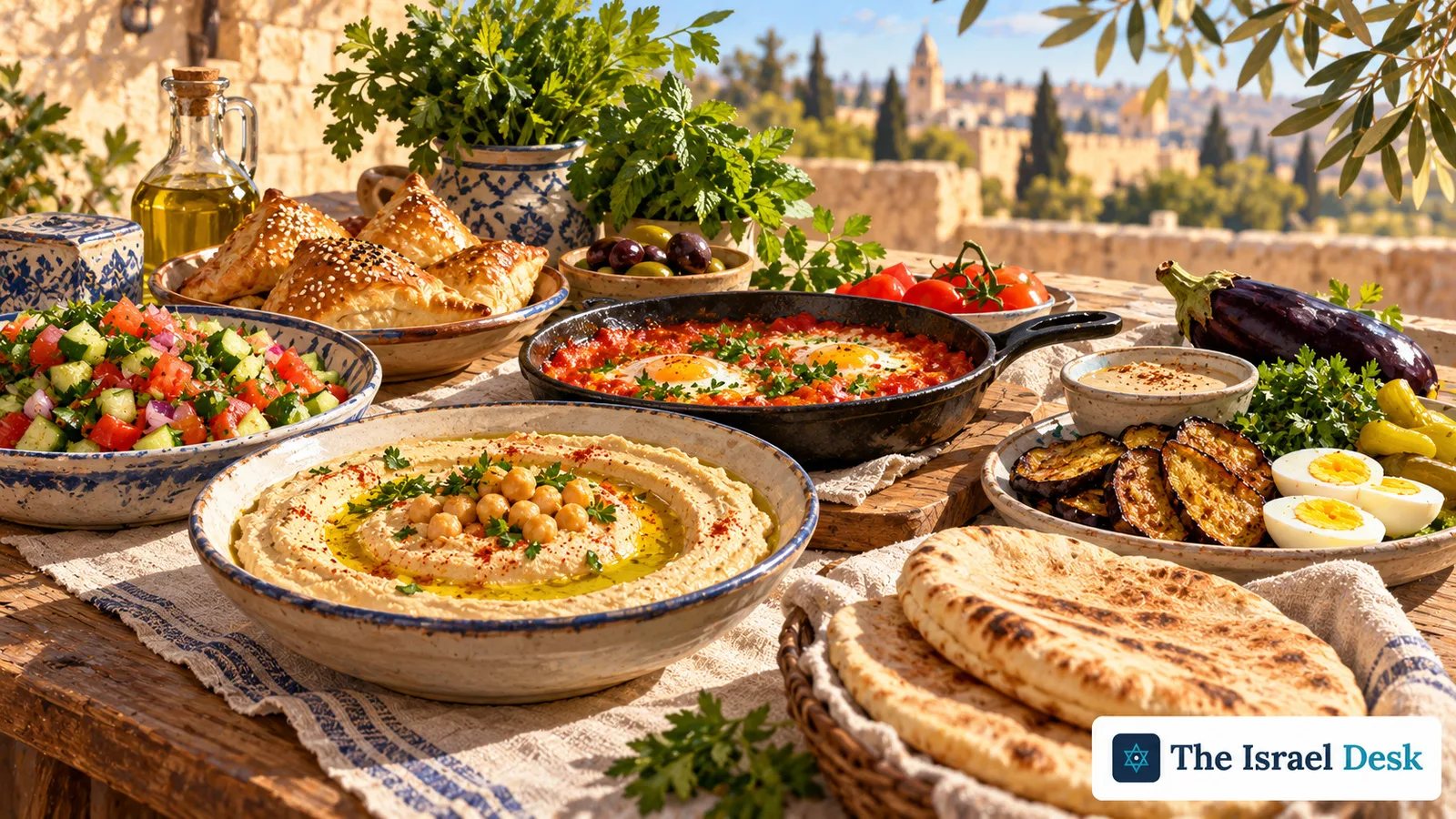
Israeli food is easiest to understand as an everyday table shaped by several histories at once. Regional ingredients, Jewish communities’ food traditions and the cooking of Arab and other local communities meet in markets, homes, bakeries and restaurants. No single dish can stand in for all of them.
A bowl of hummus, a tray of bourekas and a Friday meal tell different stories. Looking at how they are prepared, shared and adapted gives a fuller picture than searching for one supposedly definitive national menu.
Begin with ingredients
Chickpeas, sesame, olive oil, tomatoes, cucumbers and aubergines appear in many familiar dishes. Their repetition creates connections across meals without making the meals identical. Tahini can become a sauce beside vegetables or part of hummus; aubergine can be fried for a sandwich or roasted for a salad.
The contrast of texture often carries as much interest as a complicated recipe. Soft chickpeas meet fresh bread, rich sesame meets lemon, and cooked vegetables meet something crisp. Paying attention to those combinations makes an unfamiliar menu easier to read without assuming every kitchen prepares a dish in the same way.
Hummus belongs to a regional conversation
Hummus is a chickpea and tahini preparation shared across the Levant and deeply embedded in Israeli daily eating. Treating it simply as a dip can miss the experience of eating it as the center of a meal, with bread, vegetables and toppings chosen by the kitchen.
Its place on an Israeli table does not require erasing its wider regional history. The more useful questions concern the particular bowl: how smooth it is, whether it arrives warm, what accompanies it and which traditions the cook follows. Different answers can coexist without one restaurant representing an entire people or cuisine.
Migration is visible in a sandwich
Sabich brings fried aubergine, hard boiled egg and other accompaniments into pita, often with tahini and amba, the tangy mango condiment associated with Iraqi Jewish cooking. It is a useful example of how a food tradition can move from a household context into everyday street food.
Shakshuka offers another route into that story: eggs cooked in a seasoned sauce, commonly based on tomatoes, with strong North African associations. Chabad’s cooking collection includes an Israeli version, while food writer Joan Nathan documented the Libyan family tradition behind Jaffa’s Doktor Shakshuka. Neither example makes one version compulsory; recipes change with the household and the cook.
Bakeries carry several histories
Bourekas connect Israeli bakery counters with the filled pastry traditions of the Ottoman and Balkan worlds. Cheese, potato and other fillings change both flavor and texture. A bakery visit can also place those pastries beside breads and sweets shaped by very different Jewish community histories.
This is where the idea of a single national recipe becomes less useful. The same counter may make room for family memory, commercial convenience and a new variation intended for today’s customers. The National Library of Israel’s food collections and educational material preserve cookbooks, advertisements and other records that help trace changes in those habits.
The weekly meal shapes the kitchen
Shabbat adds a rhythm to food preparation, shopping and family gatherings. In observant homes, meals are planned around the day’s religious practices. Chabad’s guidance on Shabbat meals describes the roles of kiddush, the blessing over wine or grape juice, and challah, while individual households bring their own recipes and customs.
Kashrut also affects how some kitchens and menus are organized. Chabad’s explanation distinguishes meat, dairy and pareve, foods that are neither meat nor dairy. That classification is not the same as vegetarian or vegan: eggs, for example, are pareve. Not every Israeli household or restaurant keeps kosher, so the label should be checked rather than assumed.
Read the table through the people making it
A good way to learn is to ask a cook or host about one dish: how the family makes it, when they eat it and what they change from an older version. There may be a precise family memory or simply a preference for more lemon, a different filling or a particular bread.
Food culture becomes clearer through those specific answers. A dish can belong to daily Israeli life while also retaining connections to another place, language or community. The table is shared, but the histories do not have to become identical.
That is the appeal of approaching Israeli food through ordinary meals. The culture is visible in what is made at home, what is bought on the way to work and what is brought out when guests arrive. A familiar ingredient can carry a new meaning from one kitchen to the next, giving the visitor something more lasting than a checklist of dishes.