
Who Israelis Are: A Guide to Population Groups, Jewish Traditions and Minority Communities
By The Israel Desk NewsroomPublished:
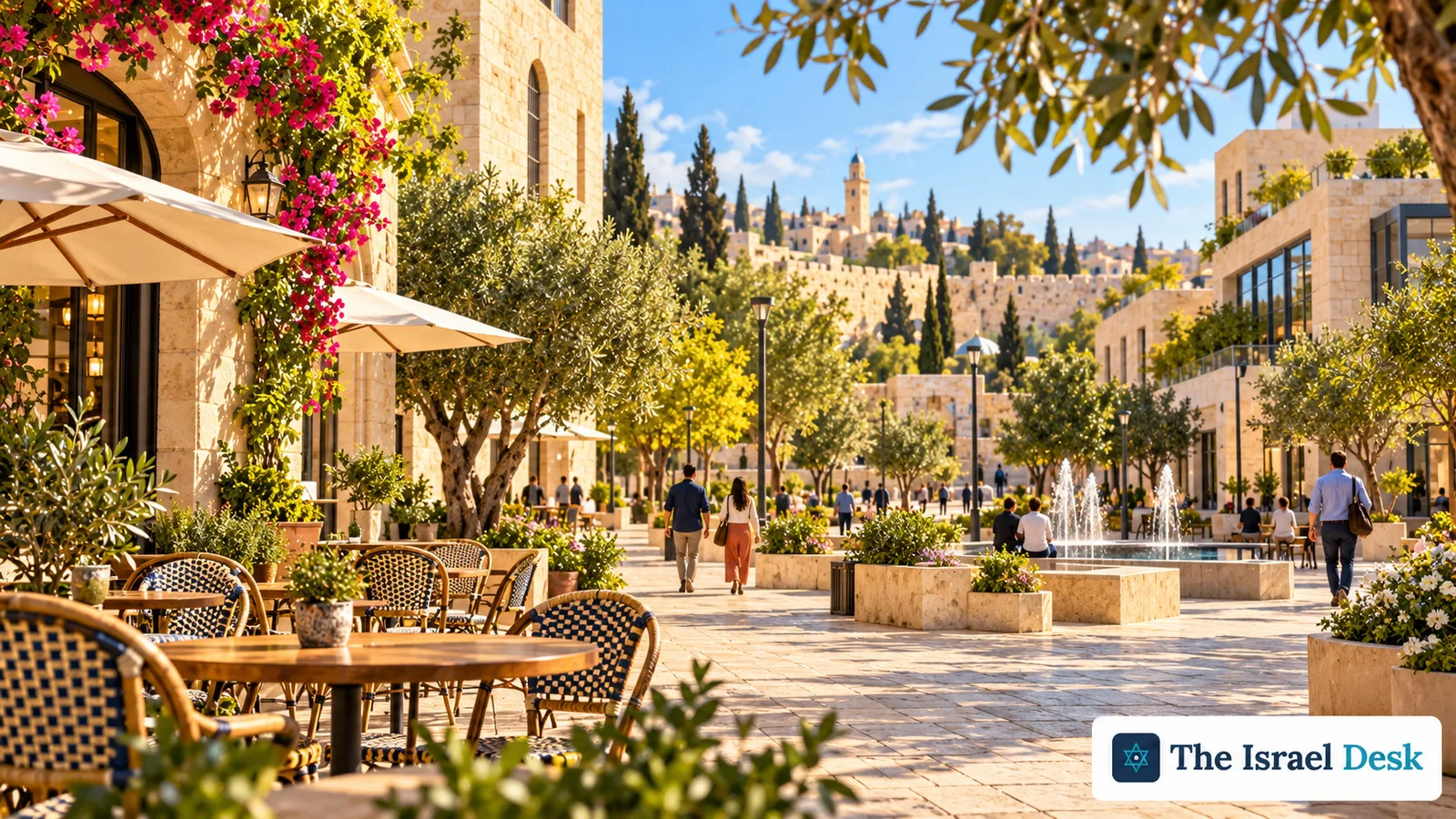
Israel's population cannot be understood through a single division. Family origin, religious identity, observance, language and citizenship describe different aspects of people's lives. Some overlap, some change across generations, and none can reliably tell a reader what an individual thinks or how that person lives.
The Central Bureau of Statistics provides a useful numerical starting point.
Read the categories before the percentages
The CBS category "Jews and others" combines Jews with non-Arab Christians, people classified in other religions and people without a religion classification in the population register.
The same release gives Jews and others as 78.3 percent and Arabs as 21.7 percent of the Israeli population excluding foreigners. Those percentages use a different denominator from the headline total of 10.305 million.
Jewish origins tell several histories
Ashkenazi, Sephardi and Mizrahi are familiar terms for Jewish communities and traditions. Ashkenazi generally refers to roots in central and eastern Europe. Sephardi is connected to the Iberian Peninsula and the communities shaped by the Spanish and Portuguese expulsions, while also describing a broader religious tradition. Mizrahi commonly refers to Jewish origins in the Middle East and North Africa.
The categories overlap. As My Jewish Learning's historical explanations describe, Sephardi communities and Jewish communities already living in Muslim lands often came to share religious practices. Israel also includes Ethiopian Jewish communities and families with roots in the former Soviet Union, the Americas and many other places. Mixed family backgrounds make neat, exclusive boxes even less useful.
Observance is a separate dimension
A person's family origin does not determine religious observance. Israeli Jews may describe themselves as secular, traditional, religious or Haredi, with further differences within each description. The CBS social survey distinguishes traditional people who are more religious from those who are less religious, recognizing that a single traditional label covers a wide range of practice.
In the 2026 annual publication, the CBS gives 2025 self-definitions among Jews aged 20 and above: 39.6 percent described themselves as not religious or secular, and 11.5 percent as Haredi.
Arab citizens belong to varied communities
Arab citizens include Muslims, Christians and people with distinct local, family and cultural identities. Bedouin communities are predominantly Muslim, but Bedouin describes a social and cultural heritage rather than a separate religion. Life in a large city, a mixed city, a village or a Bedouin locality can differ substantially without any one setting representing the whole population.
The CBS includes Druze within its broad Arab population category. Druze religious identity is distinct, and individuals may combine language, religion, citizenship and national identity in different ways.
Druze and smaller communities have distinct identities
The CBS April 23, 2026, release estimated the Druze population at approximately 154,369, using preliminary data for February 2026. Druze religious identity is distinct, and community life has deep local roots. The bureau's release also identifies Daliyat al-Karmel and Yirka as the largest Druze localities in its end-of-2024 locality figures, a different reference date from the population estimate.
Smaller communities include Circassians, Armenian Christians and Samaritans, with their own histories, religious institutions, family traditions and community languages.
A useful guide leaves room for the individual
Demography helps explain schools, neighborhoods, migration histories and the range of institutions in Israeli society. It becomes misleading when a statistical category is used as a prediction of an individual's politics, occupation or beliefs. A Russian speaker may have several overlapping identities; a traditional family may combine practices differently from its neighbors.