
Palestinian Election Plan Moves to September 2027 After November Vote Is Canceled
By The Israel Desk NewsroomPublished:
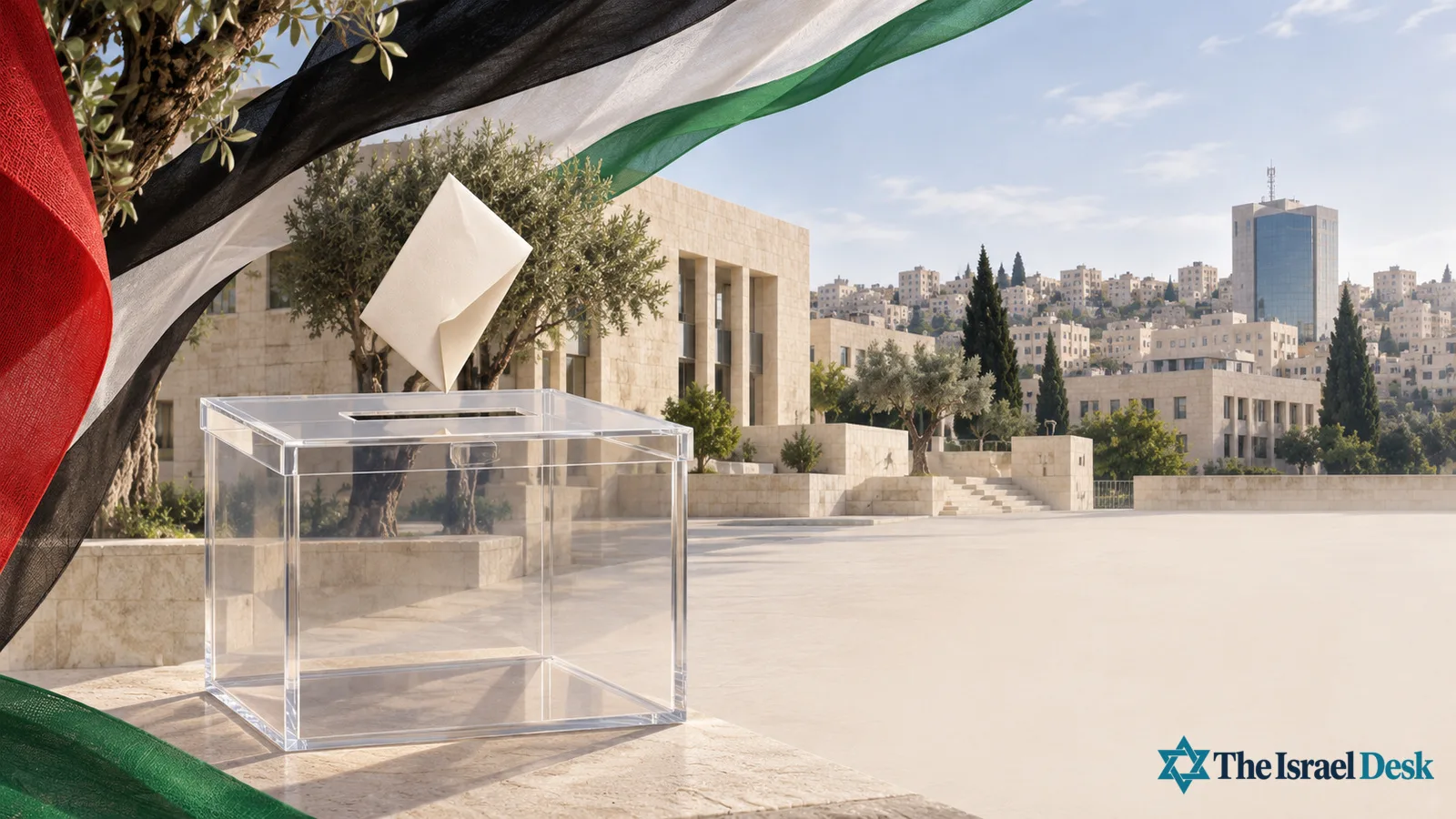
The Palestinian election timetable now points to September 11, 2027, after Mahmoud Abbas canceled the legislative vote previously scheduled for November 28, 2026. His October 10 decree calls for presidential and legislative elections on the same day. The Central Elections Commission subsequently discussed preparations with Vice President Hussein al-Sheikh on October 19, moving its administrative work toward the revised contest.
The decree replaces the November vote
The presidency's October 10 announcement says the new decision cancels Decree No. 4 of 2026, which had called the legislative election for November. The official legal register identifies the replacement as Decree No. 8 of 2026, issued and effective on October 10. The change affects both the date and the scope of the election, adding the presidency to the legislative contest.
The commission's Arabic overview of the 2026 election now records its cancellation and the new September date. November's former campaign and polling milestones belonged to the canceled process. The next electoral cycle consequently requires arrangements for two offices on a common timetable, rather than completion of the legislative calendar announced in July.
Preparations continued after the change
On October 19, commission chairman Rami Hamdallah met al-Sheikh to discuss technical, administrative and logistical preparations, according to the commission's account. Hamdallah said the commission was ready to organize the simultaneous elections under the law and was completing the work required to implement the process.
Al-Sheikh emphasized the need to create suitable conditions and raised the possibility of bringing the date forward if those conditions became available. The commission reported that both men stressed continued coordination. The decree's specified date remains September 11, 2027; the possibility discussed at the meeting was conditional, with no earlier polling date announced in that account.
The presidency cites conditions for holding the vote
The presidential announcement says the decision followed a PLO Executive Committee decision and consultations with Palestinian factions. It argues that political, security and field conditions need to be prepared for an inclusive election, and calls for further Palestinian dialogue on the obstacles facing the process.
The PLO Executive Committee's October 10 statement, carried by the official Palestinian news agency WAFA, cited the absence of anticipated security arrangements in Gaza, difficulties accessing the territory for election personnel and observers, and the safety of voters, candidates and staff. These were the Palestinian leadership's stated reasons for changing the schedule. The new decree sets a later target while those operational questions remain part of the preparations.
Different institutions have different roles
The legislative contest concerns the Palestinian Legislative Council, the 132-seat legislature within the Palestinian Authority's governing framework. The presidential vote chooses a separate office. Holding the ballots together combines their timing while preserving the distinct positions voters are being asked to fill.
The Palestinian Authority administers public institutions. The Palestine Liberation Organization has its own representative bodies, including the Palestinian National Council, and its Executive Committee participated in the political decision described by the presidency. The Central Elections Commission administers the electoral process. Hamas is a political and armed movement designated a terrorist organization by Israel, the United States and the European Union; it is separate from those administrative and representative institutions.
The earlier rules show the work behind a legislative ballot
The commission's published nomination guidance for the canceled 2026 contest describes a closed list system. Candidates enter through lists formed by a party, coalition or group of voters. Seats won by a list are allocated in its predetermined candidate order, making negotiations over positions consequential before any votes are counted.
That guidance required between 16 and 132 candidates per list, women's representation in legally specified positions, and separate US$10,000 nomination and campaign deposits. It also established challenges, court appeals and authorized representatives. These provisions describe the framework prepared for the earlier election. Candidates and organizations now need the commission's applicable instructions and deadlines for the rescheduled process before making submissions or financial commitments.
The next test is the operational timetable
The commission's October 19 account centers on the practical work of organizing simultaneous elections. Registration, nominations, challenges, campaign rules and observation arrangements all require published procedures tied to the operative electoral calendar. Political agreement on a date is one part of that process; implementing the stages gives voters and competing organizations the instructions they need.
The immediate governing documents are the October 10 decree and the commission's subsequent preparation notices. The former November polling date has been canceled. The next announced destination is a combined presidential and legislative election in September 2027, with the commission preparing the machinery and Palestinian leaders still discussing the conditions under which it can proceed.