
Israel and Cyprus Expand Naval Cooperation with a New Patrol Vessel and an Upgrade to an Existing Ship
By The Israel Desk NewsroomPublished:
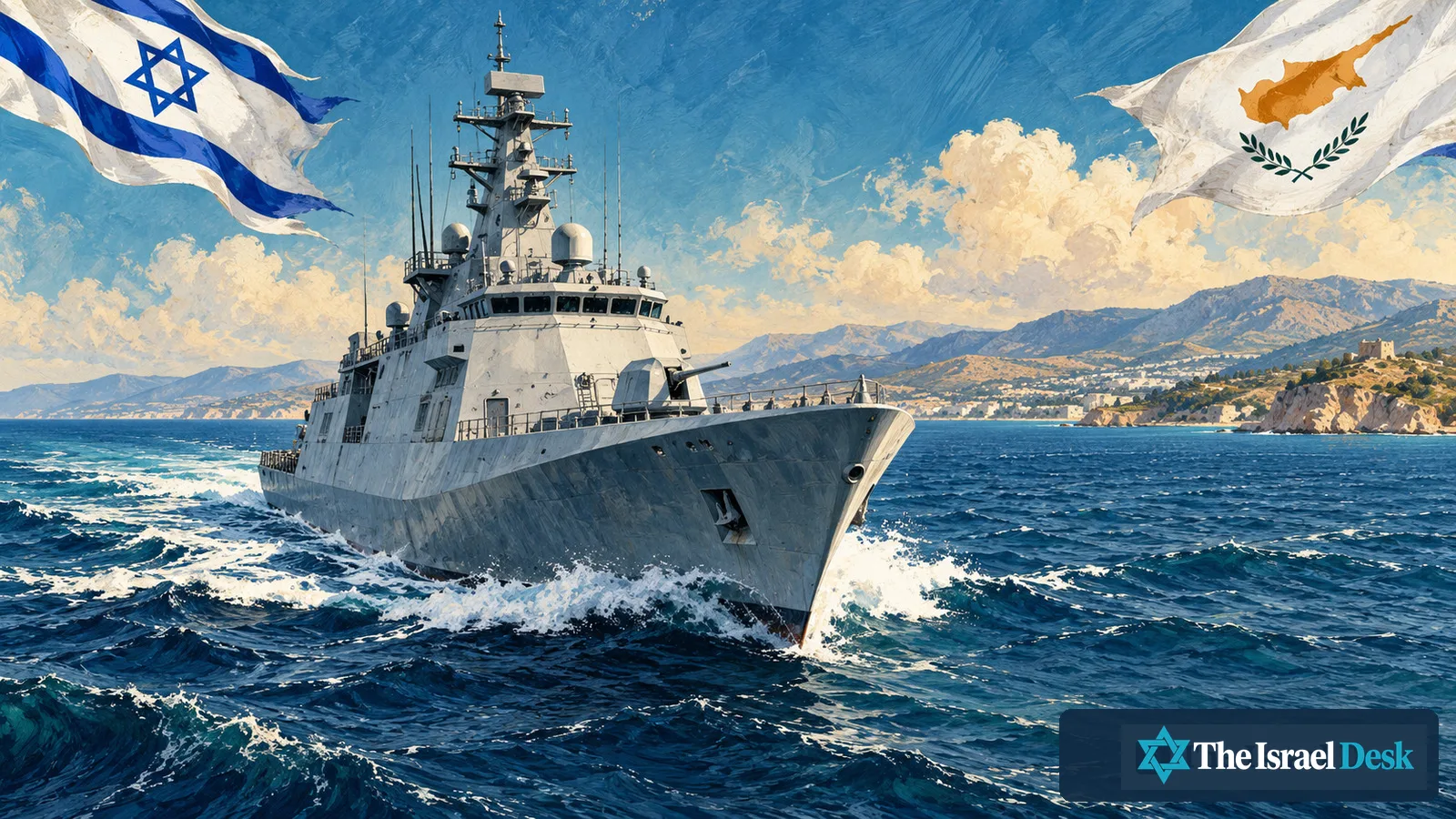
Israel and Cyprus signed a defense agreement on October 26 covering a new offshore patrol vessel and upgrades to systems aboard an existing Cypriot ship. The Jerusalem Post reported the announcement, citing Israel’s Defense Ministry. The new vessel will be built by Israel Shipyards and equipped with naval systems from Rafael.
A second vessel is only part of the agreement
The package also covers the existing patrol vessel Ioannides, already built by Israel Shipyards. The ministry described the combination as strengthening the Cyprus Naval Command’s ability to respond to maritime security challenges. Its stated tasks include expanded patrols, surveillance and search and rescue.
This is a procurement agreement, not an announcement that a new ship has entered service. Signing, construction, fitting equipment, testing and operational acceptance are distinct stages. The Israel Desk could not independently find information about a confirmed delivery date or the final configuration of the new vessel.
The partnership extends across the ship’s systems
The agreement was signed in Cyprus by Israeli Defense Ministry Director General Amir Baram and Stelios Kountouris, acting permanent secretary of the Cypriot Defense Ministry, the newspaper reported. Israel’s International Defense Cooperation Directorate, known as SIBAT, and its Cypriot counterpart led the transaction.
The industrial roles are complementary: Israel Shipyards supplies the vessel platform, while Rafael supplies naval systems. Upgrading an existing ship alongside acquiring another creates a continuing relationship around equipment and its operation, extending the partnership beyond the signing ceremony.
Why the eastern Mediterranean matters
Cyprus and Israel share an interest in the security of maritime approaches in the eastern Mediterranean. Patrol vessels can support monitoring and response across sea areas where commercial traffic, coastal activity and emergency calls compete for attention. Search and rescue is explicitly among the missions named in the ministry’s account.
The Jerusalem Post places the agreement within cooperation that already includes naval security, exercises and defense procurement, alongside coordination involving Greece. The new contract gives that relationship a concrete industrial component: another vessel and renewed equipment on one already serving Cyprus.
Capability will depend on what reaches service
A ship’s name or purchase announcement alone cannot explain what its crews will be able to detect, communicate or respond to. Those capabilities depend on installed systems, integration, training and the missions assigned by the navy. The published announcement identifies the suppliers and broad purpose without settling every technical detail.
The next useful milestones are therefore construction progress, the confirmed equipment package and the acceptance of the upgraded and new vessels. For now, the substantive development is a signed agreement that links Israeli industry with Cyprus’s continuing maritime security requirements and strengthens an existing bilateral defense relationship.