Shekels, Chips and Gas: How the Israeli Economy Actually Works
By The Israel Desk NewsroomPublished:
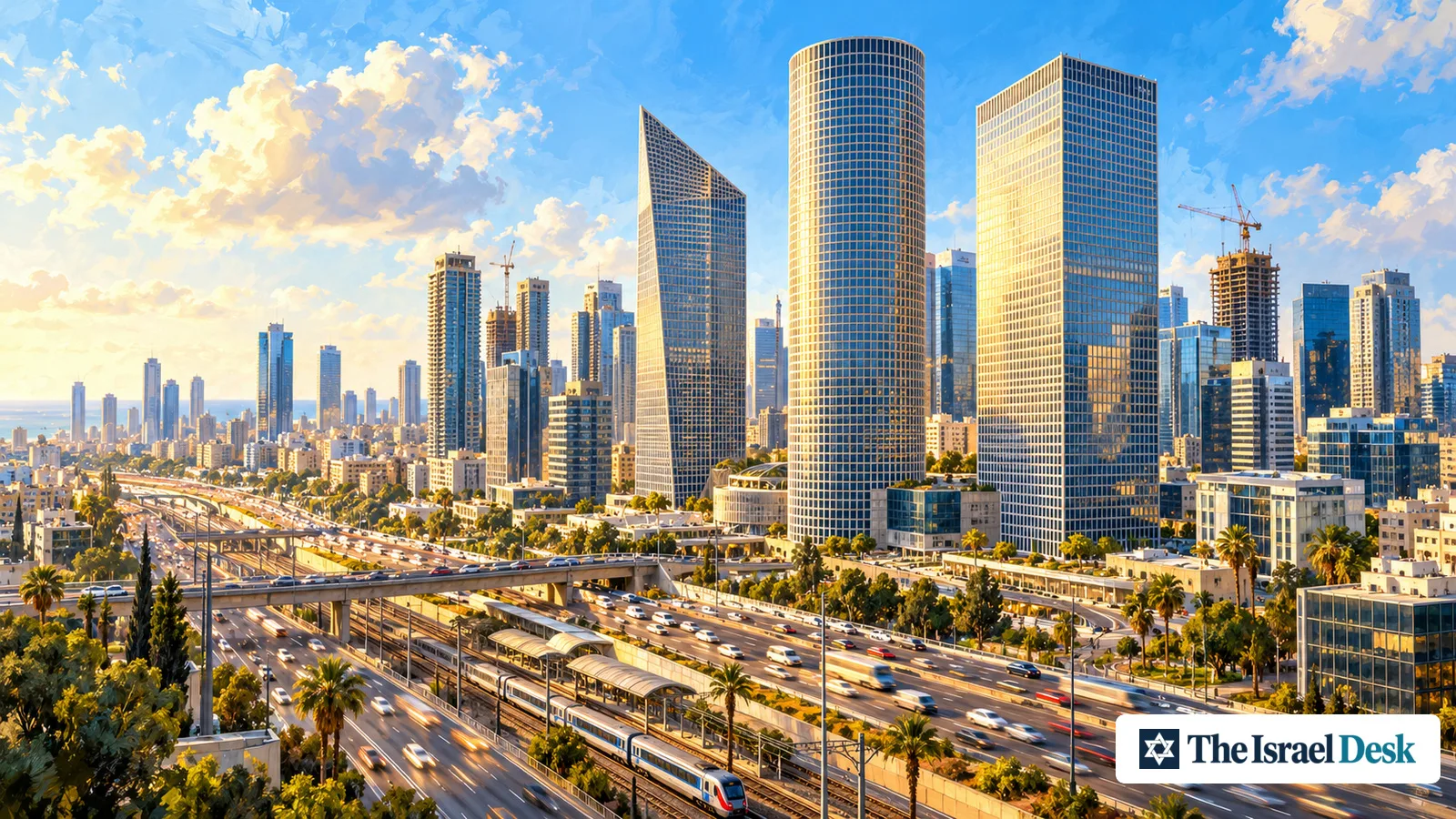
Israel's economy is a running paradox in the news: a country at war whose currency is among the world's harder ones, a boycott target whose exports keep climbing, a high-tech power where large communities live below the poverty line. The stories make sense once you see the structure. Here it is, floor by floor.
The engine: technology
High tech is the economy's engine room. It employs roughly a tenth of Israeli workers yet produces about a fifth of output, roughly half of exports and a large share of income-tax revenue. The sector grew out of military technology units, university labs and a venture-capital industry that took root in the 1990s; multinationals from Intel to Google to Nvidia run major development centers in the country. When this section covers a startup's sale or a chip plant's expansion, it is covering the tax base that funds everything else.
The anchor: a hard shekel
The shekel spent much of the last two decades as a strong currency, pushed up by tech inflows, gas exports and a current-account surplus. The Bank of Israel, the independent central bank, manages interest rates and holds large foreign reserves it can deploy when war shakes the market, as it did in October 2023 with a 30-billion-dollar backstop that steadied the currency within weeks. Watch the shekel-dollar rate in any crisis: it is the fastest public gauge of how investors read the war.
The newer floor: gas underfoot
The Tamar and Leviathan fields, found offshore in 2009 and 2010, turned Israel from an energy importer into a gas exporter to Egypt and Jordan, with pipelines doing quiet diplomatic work that treaties announce loudly. A sovereign wealth fund collects a slice of the profits.
The cracks
The same economy carries chronic gaps. Haredi men and Arab women participate in the workforce at low rates, a drag every budget debate returns to. Housing prices roughly tripled in two decades, making Tel Aviv one of the world's expensive cities. Food and banking are concentrated among few players, keeping prices high; the 2011 cottage-cheese protests that filled the streets began over exactly this. And wars cost: reserve call-ups pull workers from desks, tourism collapses overnight, and deficits swell with defense spending.
How to read the numbers here
When this section quotes growth, remember population: Israel grows by nearly two percent a year, so per-capita growth is the honest measure. When it quotes credit ratings, read the outlook line, where agencies park their war worries. And when a headline says the economy is collapsing or booming, check which floor it is describing: the engine, the anchor or the cracks rarely move together.