The Most Covered Country on Earth: A Field Guide to Israel Coverage
By The Israel Desk NewsroomPublished:
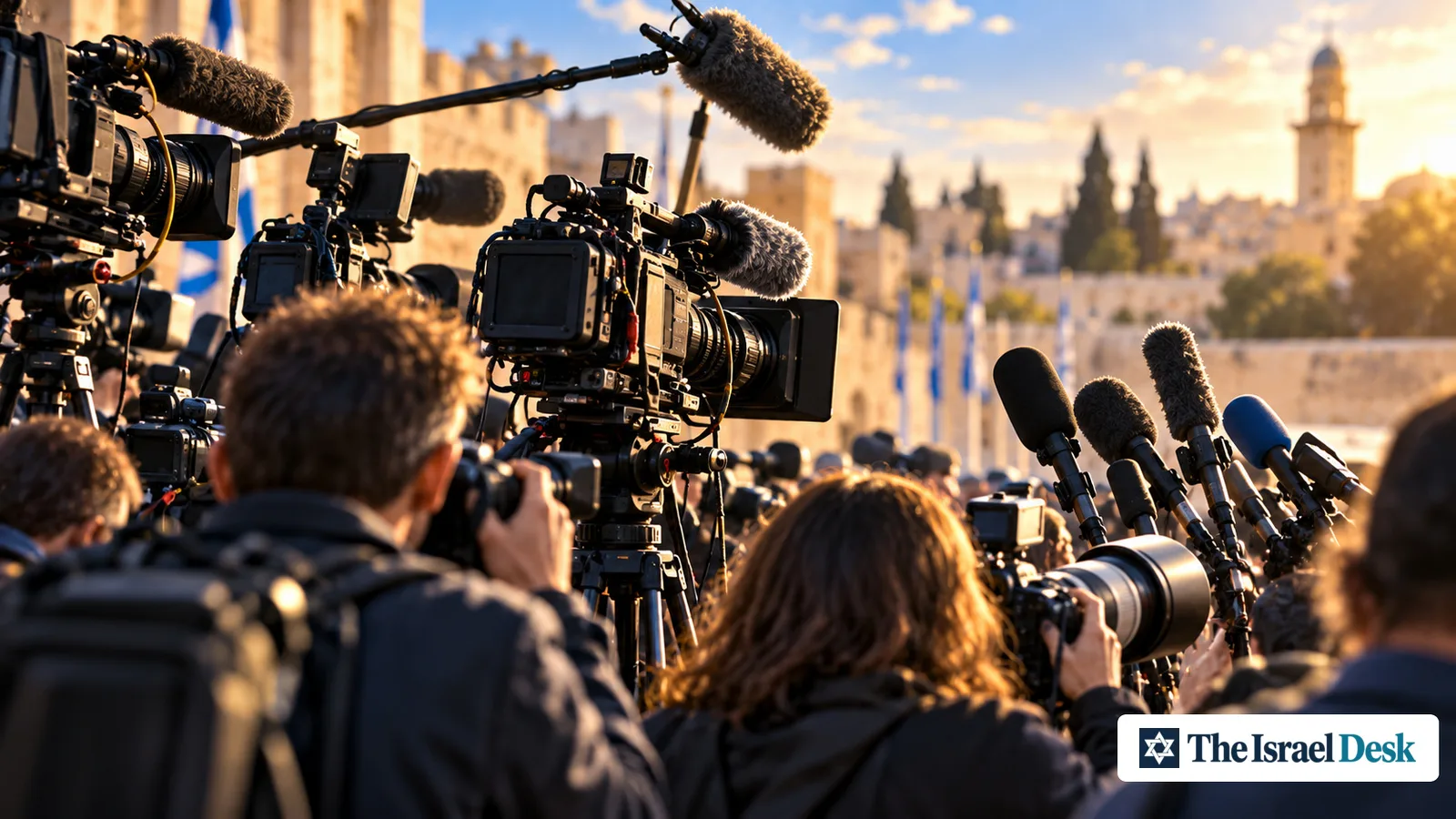
Israel is roughly the size of New Jersey, yet on many days it leads newscasts on three continents. Hundreds of foreign journalists are accredited there, among the densest press corps in the world, and billions of people form their picture of the country through what that corps files. This page exists to watch that machine. Here is how it works, and how to read its output.
Why so much coverage
Several engines run at once. The conflict touches three world religions and their holy places, so it carries meaning far beyond its map. Great powers have interests in the region, so every escalation is also a global story. Israel is open: journalists can be based there, work there and criticize it from inside it, which is not true of most of its neighbors. And decades of coverage feed on themselves, because an audience trained to care keeps caring.
Where the words come from
Most of what you read is assembled from a small set of inputs: statements from the military and government, statements from Palestinian authorities and from Hamas-run bodies in Gaza, footage and claims circulating on social networks, and the reporter's own sources. Each input has interests. A careful story says which input each fact came from; a careless one blends them into a single confident voice.
Five habits for reading it
First, find the attribution. "According to health officials in Gaza" and "according to the military" are different claims, not established facts. Second, watch the verbs. Who attacked, who responded, who "died" and who "was killed" can carry a verdict inside the grammar. Third, check the clock. Early casualty figures and first explanations are routinely revised, and the correction rarely travels as far as the original. Fourth, notice what is absent: a story about a strike that never mentions what was struck, or a rocket barrage that appears only as background in the fifth paragraph. Fifth, separate the photograph from the caption. Images are usually real; the framing around them is where the argument lives.
What this section does
Media Watch tracks how major outlets cover Israel: corrections issued and not issued, terminology choices, wire photos and their captions, and the gap between a headline and the story underneath it. The goal is not to declare the press an enemy. It is to treat coverage as a product with a supply chain, one that readers are entitled to inspect.
The honest bottom line
No outlet, this one included, stands outside the problem. Every newsroom chooses what to cover and what to skip, and the choice is itself a statement. The defense against that is not finding one perfect source. It is reading several imperfect ones with your eyes open.