Israel's Fronts, Explained: The Borders That Define Its Wars
By The Israel Desk NewsroomPublished:
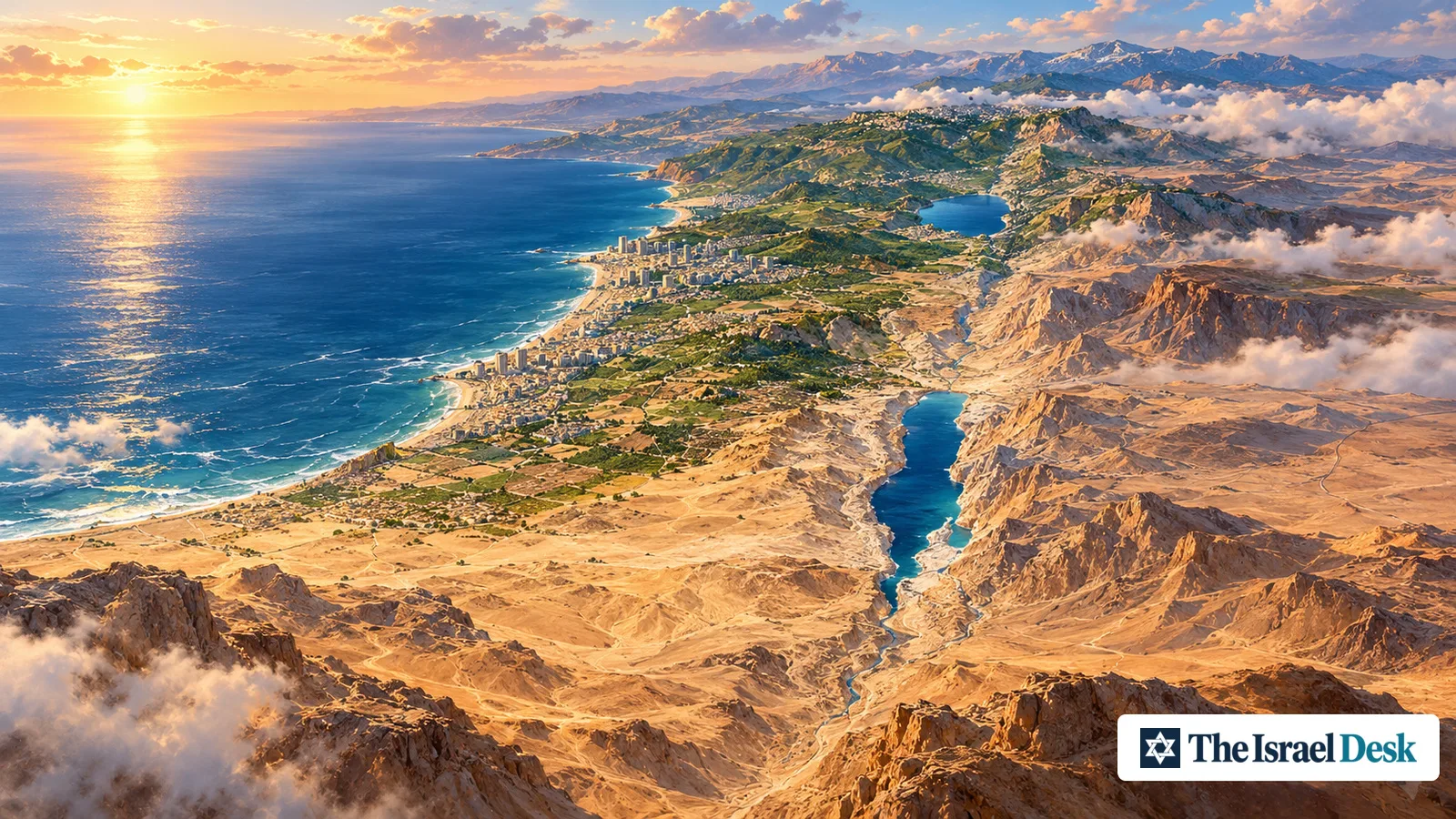
When Israelis talk about the security situation, they rarely speak of a front. They speak of fronts. A country smaller than many metropolitan areas manages several distinct arenas at once, and what happens on one of them has a way of deciding the temperature on all the others.
Gaza in the south
The Gaza Strip, roughly forty kilometers of coastline bordering Israel's south, has been controlled by Hamas since 2007. It is the arena the world knows best: rocket fire toward Israeli towns, tunnel networks under the border, and repeated rounds of war, the largest of which began with the Hamas attack of October 7, 2023. For communities like Sderot and the kibbutzim of the western Negev, the Gaza front is not a news item but the view from the window.
Lebanon and the northern border
Across the northern border sits Hezbollah, an Iranian-backed force with an arsenal of rockets and missiles accumulated over decades. The border zone, from the Mediterranean to Mount Dov, has seen full war in 2006 and long stretches of managed fire since. Tens of thousands of Israelis from northern towns have learned what evacuation means, and the fate of the north is a fixed item on every Israeli government's agenda.
Syria and the Golan Heights
The Syrian arena works differently. Since Syria's civil war broke the old order, the front has been defined less by the Syrian state than by Iranian attempts to entrench forces and move weapons through Syrian territory. Israel's answer has been a long campaign of strikes aimed at convoys, depots and infrastructure, conducted mostly without acknowledgment, in what analysts call the campaign between the wars.
The West Bank and the inner arena
Judea and Samaria, the West Bank, is a front of a different kind: dense, close and woven into daily life. Israeli security forces operate there continuously against armed cells, with the cities of the northern West Bank, Jenin and Nablus among them, as recurring focal points. Because the arena sits minutes from Israel's population centers, escalation here is felt immediately and everywhere.
The far circle: the Red Sea and Iran
The newest arena stretches far beyond Israel's borders. From Yemen, the Houthis have fired drones and missiles toward Eilat and attacked shipping lanes that feed Israeli ports. Behind them, as behind Hezbollah and Hamas, stands Iran, which funds, arms and coordinates what it calls the axis of resistance. That is the thread that ties the map together: separate fronts, one strategic file. Read any single border story on this site with the whole map in mind, and the pieces start to explain each other.